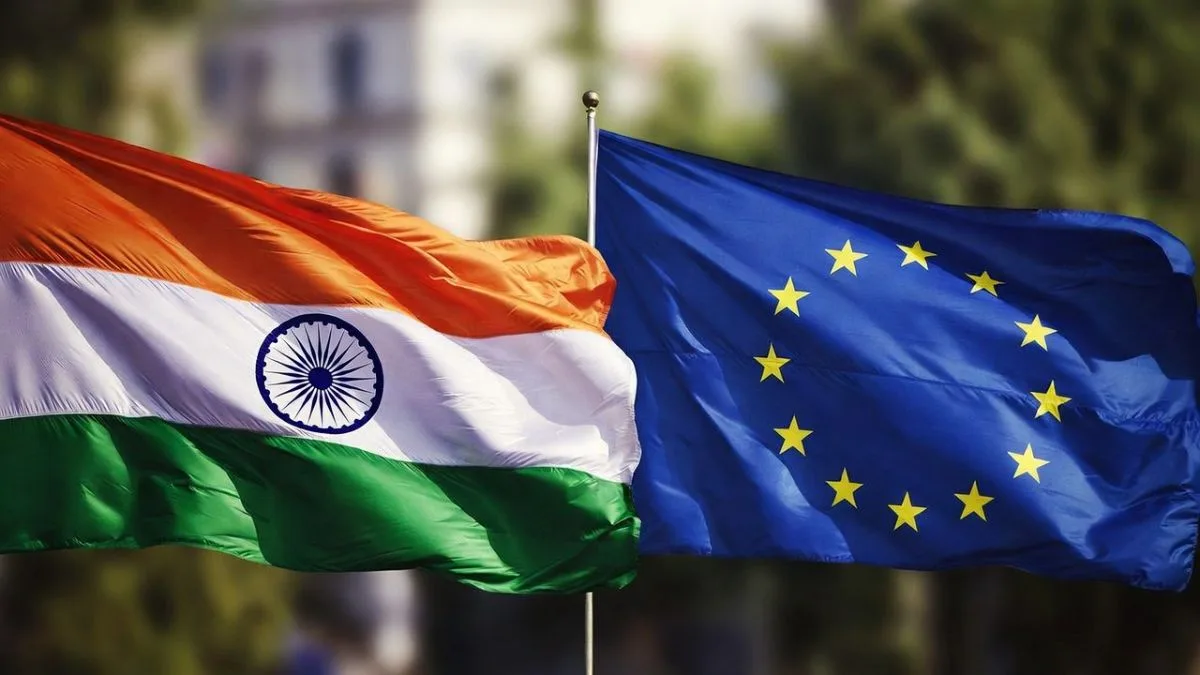
India and the European Union (EU) have decided to take their partnership to the next level with a major push in technology, trade and innovation. At the third meeting of the India-EU Trade and Technology Council (TTC) held in Brussels, both sides agreed to deepen cooperation in areas such as semiconductors, artificial intelligence (AI), clean energy, digital connectivity and resilient supply chains.
The new decisions come at a time when countries across the world are looking to secure critical technologies and reduce risks caused by global geopolitical tensions. India and the EU believe stronger cooperation will help build more reliable supply chains, encourage innovation and create new business opportunities.
Advertisement
Leaders meet in Brussels to shape future cooperation
The high-level meeting brought together senior leaders from both India and the European Union.
India was represented by External Affairs Minister S. Jaishankar, Commerce and Industry Minister Piyush Goyal, and Minister of State for Electronics and Information Technology Jitin Prasada.
The European Union delegation included European Commission Executive Vice-President Henna Virkkunen, Trade Commissioner Maroš Šefčovič and Innovation Commissioner Ekaterina Zaharieva.
The Trade and Technology Council was originally launched in 2022 by European Commission President Ursula von der Leyen and Prime Minister Narendra Modi. It was created to strengthen cooperation in trade, trusted technologies and security-related issues.
During the latest meeting, both sides agreed that the current TTC structure should become more result-oriented. Instead of broad discussions, future work will focus on specific industrial value chains with stronger participation from businesses and industry experts. Officials will prepare detailed plans for this new framework later this year.
The discussions also built on the commitments made during the 16th India-EU Summit held in New Delhi in January, where leaders agreed to strengthen their strategic partnership further.
Big push for AI, semiconductors and future technologies
Technology remained one of the biggest focus areas of the meeting.
India and the EU agreed to increase cooperation in artificial intelligence, quantum technologies, high-performance computing, semiconductor ecosystems and next-generation telecom technologies.
One of the important announcements was the plan to explore a joint roadmap for artificial intelligence. The partners will continue discussions on responsible use of AI, including governance frameworks for emerging applications in sectors such as healthcare.
The two sides also agreed to improve cooperation on digital identity systems. They will study ways to make the European Union Digital Identity Wallet work alongside India’s DigiLocker platform through agreed use cases, making digital services more connected and accessible.
Semiconductor partnership gets a major boost
Semiconductors emerged as one of the strongest pillars of the new partnership.
India and the EU reaffirmed their commitment to building resilient semiconductor supply chains and reducing dependence on limited global manufacturing hubs.
A joint India-EU Semiconductor Roundtable will be organised during Semicon India 2026.
Both sides will also explore partnerships between India’s semiconductor design facilities and European chip initiatives. The goal is to support advanced chip manufacturing, semiconductor design and silicon prototyping.
The partners further agreed to continue working together on 6G standardisation, digital infrastructure and improving mobility opportunities for skilled information and communications technology professionals.
Research and clean technology take centre stage
Beyond digital technology, India and the EU also expanded cooperation in scientific research and clean energy.
The two sides announced plans to begin formal negotiations for India’s association with Horizon Europe, the European Union’s €93.5 billion research and innovation programme. They hope to complete these negotiations by the end of 2026.
If successful, Indian researchers, universities and innovators will be able to participate more actively in Horizon Europe projects from 2027, opening doors to larger international collaborations.
Another major announcement was the creation of the first India-EU Innovation Hub dedicated to electric vehicle charging technologies and testing. The initiative will be jointly led by the European Commission’s Joint Research Centre and India’s Automotive Research Association.
Both partners also highlighted ongoing joint research projects in renewable hydrogen, marine pollution monitoring and recycling of electric vehicle batteries.
Stronger supply chains and easier trade
India and the European Union also agreed to strengthen cooperation across several important supply chains.
The partnership will focus on sectors such as pharmaceuticals, agriculture, clean energy, critical technologies.
Both sides also encouraged stronger business-to-business engagement to create new investment and commercial opportunities.
Trade-related discussions covered agricultural market access, technical regulations and standards that often create barriers for businesses. India and the EU agreed to continue working towards better regulatory alignment and smoother trade facilitation.
The partners also reaffirmed their support for the multilateral trading system and called for reforms.
On the European Union’s Carbon Border Adjustment Mechanism (CBAM), both sides stressed that Indian companies should have timely access to accredited verification services so they can comply with the new carbon-related requirements.
New opportunities for startups and industry
Innovation and entrepreneurship were another major focus of the meeting.
India and the EU agreed to explore a dedicated TTC platform for the “Blue Valleys” initiative. The platform aims to create specialised industrial clusters by bringing together regulators, companies, startups and research institutions.
The partners also announced plans to establish a Deep-Tech Startup Partnership involving organisations such as the European Innovation Council and Start-Up India.
In another step to strengthen business engagement, both sides agreed that India-EU Business Forum will now take place every year along with industry-specific meetings focused on priority sectors.
The next ministerial meeting of the India-EU Trade and Technology Council is going to take place in New Delhi in 2027.